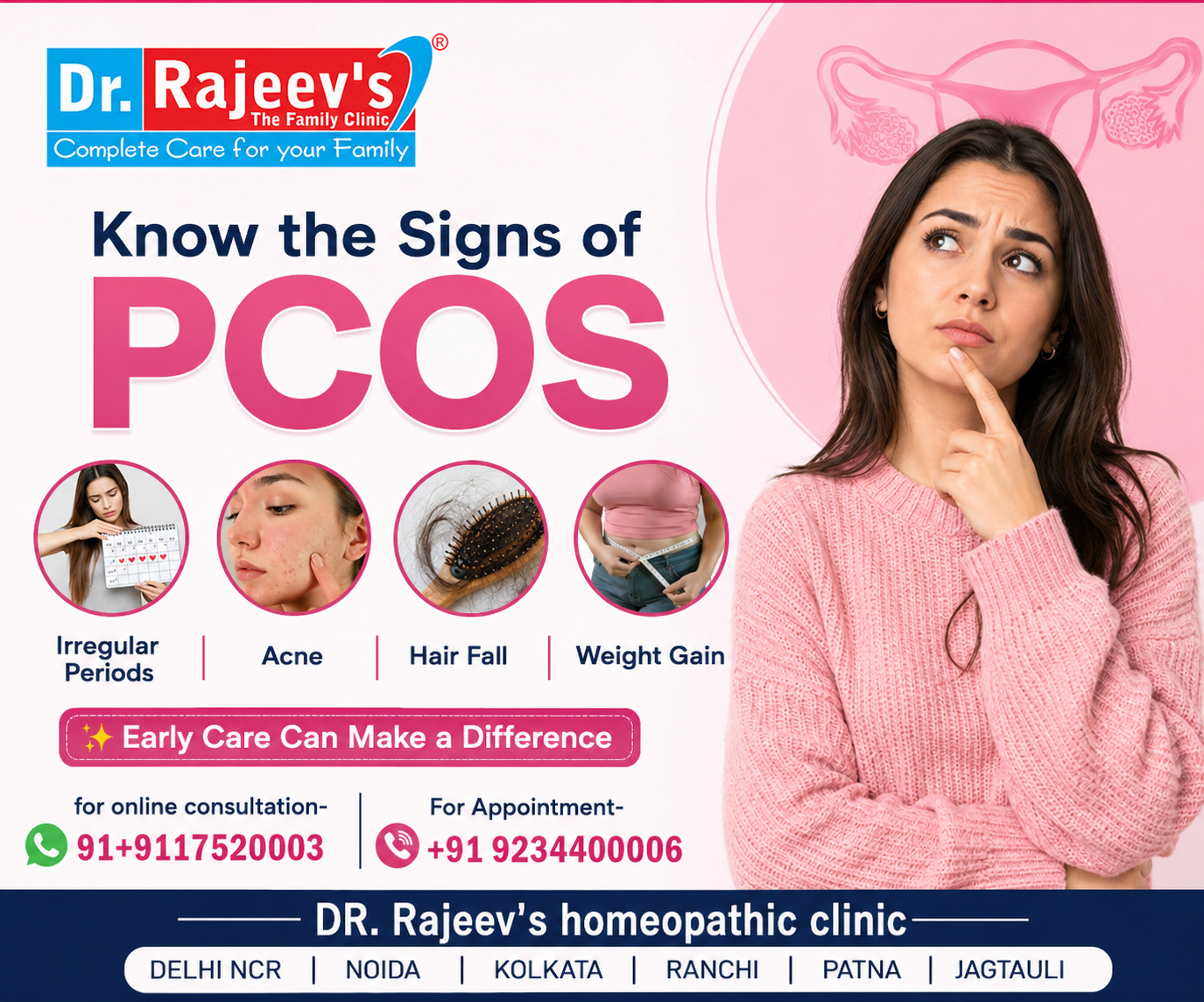
Polycystic Ovary Syndrome (PCOS) is one of the most common hormonal disorders affecting women of reproductive age. It can impact menstrual cycles, fertility, metabolism, skin health, and emotional well-being. Many women with PCOS experience irregular periods, acne, weight gain, excessive hair growth, or difficulty conceiving.
Although PCOS cannot always be cured, early diagnosis, lifestyle changes, and appropriate medical treatment can help manage symptoms effectively. Many women also explore homeopathic treatment for PCOS as a complementary approach to support overall health.
At Dr. Rajeev Homeopathic Clinic, Dr. Rajeev provides individualized homeopathic consultations that focus on the patient's hormonal health, lifestyle, and overall well-being.
What is Polycystic Ovary Syndrome (PCOS)?
Polycystic Ovary Syndrome (PCOS) is a hormonal condition in which the ovaries may produce higher-than-normal levels of androgens (male hormones). This hormonal imbalance can interfere with ovulation and cause multiple small fluid-filled sacs (often called cysts) to develop on the ovaries.
Not every woman with PCOS has ovarian cysts, and not every ovarian cyst means PCOS. Diagnosis is based on symptoms, medical history, physical examination, blood tests, and ultrasound findings.
What Are the Symptoms of PCOS?
Many women ask, "What are the symptoms of PCOS?"
Common PCOS symptoms include:
Causes of PCOS
The exact cause of Polycystic Ovary Syndrome is not fully understood, but several factors may contribute.
Increased androgen levels can interfere with ovulation.
Many women with PCOS have insulin resistance, which may increase insulin levels and contribute to hormonal imbalance.
A family history of PCOS increases the risk.
Persistent inflammation may influence hormone production.
Risk Factors
You may be at higher risk if you:
Possible Complications
Without proper management, PCOS may increase the risk of:
How is PCOS Diagnosed?
Doctors may recommend:
Homeopathic Treatment for PCOS
Many women choose homeopathic treatment for PCOS because it follows an individualized and holistic approach.
At Dr. Rajeev Homeopathic Clinic, Dr. Rajeev evaluates:
Based on the assessment, a personalized treatment plan is prepared.
Important: PCOS is a medical condition that should be diagnosed and monitored by a qualified gynecologist or endocrinologist. Homeopathy may be used as complementary supportive care and should not replace medically recommended treatments, especially when fertility treatment, diabetes management, or hormonal therapy is needed.
Lifestyle Tips for Women with PCOS
Healthy lifestyle changes play an important role in managing PCOS.
Even modest weight loss can improve symptoms.
Aim for at least 150 minutes of moderate exercise each week.
Choose whole grains, lean protein, fruits, vegetables, and healthy fats.
Reducing refined sugar may help improve insulin sensitivity.
Yoga, meditation, and adequate sleep can support hormonal balance.
Routine monitoring helps manage long-term health risks.
Can PCOS Be Prevented?
There is no guaranteed way to prevent PCOS, but maintaining a healthy lifestyle may reduce the severity of symptoms and lower the risk of complications.
Why Choose Dr. Rajeev Homeopathic Clinic?
At Dr. Rajeev Homeopathic Clinic, we focus on holistic and patient-centered care.
Conclusion
Polycystic Ovary Syndrome (PCOS) is a common hormonal disorder that affects many women during their reproductive years. Early diagnosis, healthy lifestyle habits, regular medical care, and appropriate treatment can help manage symptoms and improve quality of life.
While homeopathic treatment for PCOS may offer supportive complementary care, it should be combined with appropriate medical evaluation and follow-up. If you experience PCOS symptoms such as irregular periods, weight gain, acne, or difficulty conceiving, consult a qualified healthcare professional.
For personalized homeopathic consultation and holistic wellness support, visit Dr. Rajeev Homeopathic Clinic.
Frequently Asked Questions (FAQs)
PCOS (Polycystic Ovary Syndrome) is a hormonal disorder that affects ovulation and women's reproductive health.
Common symptoms include irregular periods, acne, weight gain, excessive hair growth, hair thinning, and fertility problems.
The exact cause is unknown, but hormonal imbalance, insulin resistance, genetics, and inflammation may contribute.
Yes. PCOS can interfere with ovulation, making it more difficult to become pregnant. Many women with PCOS can conceive with appropriate treatment.
Doctors diagnose PCOS using medical history, physical examination, blood tests, and pelvic ultrasound.
There is currently no cure, but symptoms can often be managed effectively through lifestyle changes and appropriate medical treatment.
Homeopathy may be used as complementary supportive care based on an individual's symptoms and overall health. It should not replace conventional medical management.
Whole grains, fruits, vegetables, lean protein, legumes, nuts, seeds, and healthy fats can support overall health.
Consult a healthcare professional if you have irregular periods, difficulty conceiving, excessive hair growth, unexplained weight gain, or severe acne.
You can visit Dr. Rajeev Homeopathic Clinic for personalized homeopathic consultations and holistic support for women's health.


ABHI HOMEO HALL is a one and half decade old renowned clinic that offers the best quality, non-toxic and highly effective treatment in Ranchi, Patna and Delhi.
Read More